Dermatology deserts and digital frontiers: how Brazil is rebuilding the dermatology pathway


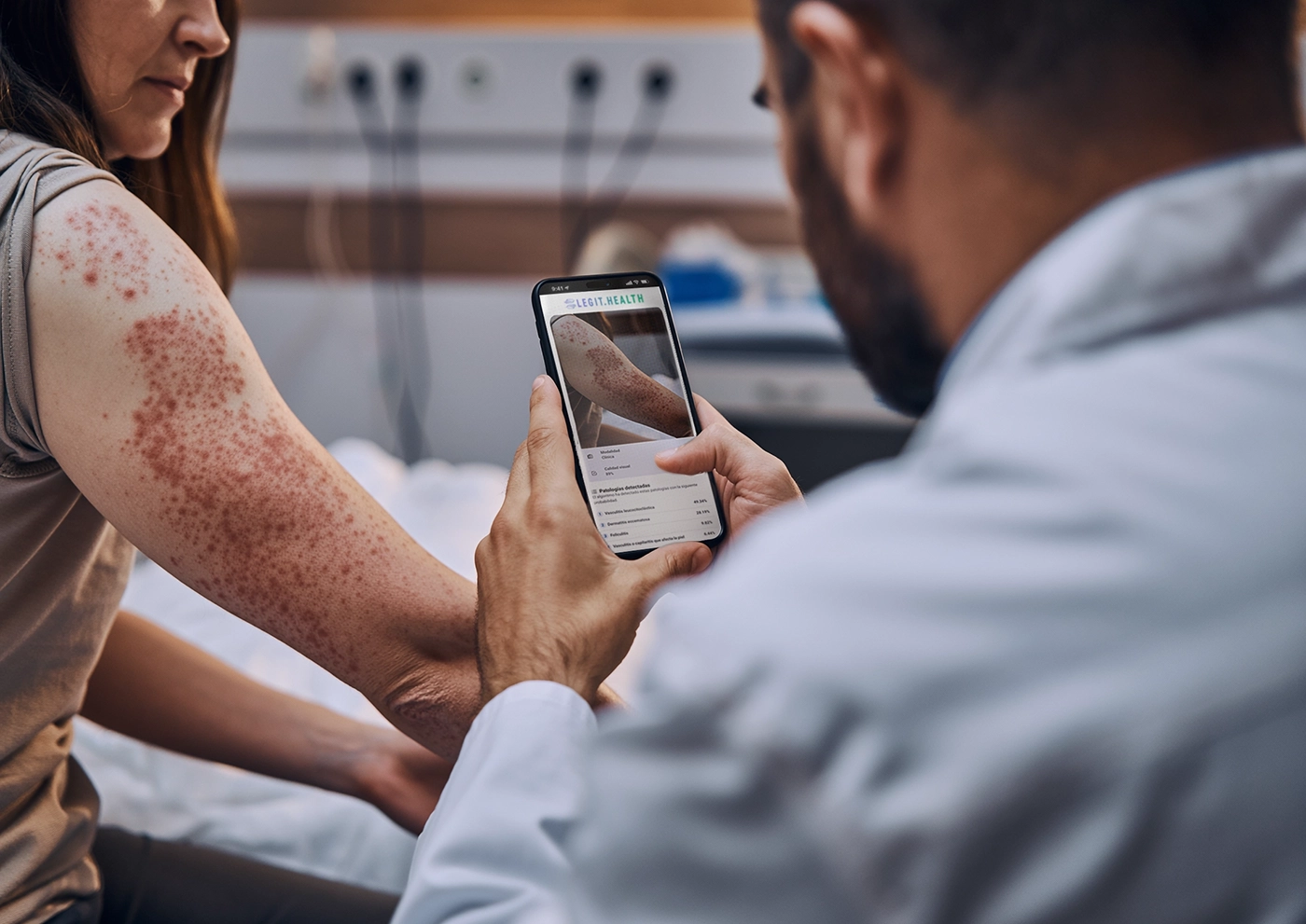
A clinician reviewing a case on the Legit.Health interface.
In a small town in the interior of the Northeast, a primary-care physician suspects melanoma in a 62-year-old patient. She writes a referral. The referral describes the lesion in words: there is no standardised photograph, no objective severity measurement, no structured baseline. The patient joins the queue. The queue moves at the speed of a continent: before telemedicine programmes began to compress it, the average wait for a dermatology appointment in the SUS reached 294 days. [^1]
Skin cancer does not wait 294 days.
This is the access deficit that defines Brazilian dermatology today, and it is a different deficit from the one other countries face. Brazil is a continental country with a dual health system, and the dermatology bottleneck is not one queue: it is two parallel queues, both under pressure, each for slightly different reasons. A clinically validated layer of artificial intelligence (AI) that covers the full spectrum of dermatology (skin cancer, chronic disease and longitudinal follow-up) and is certified by ANVISA, with CE marking and MHRA registration, is the missing piece in both queues.