Sample Outputs and Deliverables
This page shows the concrete outputs that sponsors, CROs, and investigators receive from each atopic dermatitis severity assessment. The platform produces a structured SCORAD Local report after the complete protocol-required image set has been processed.
Per-visit assessment report
Each completed assessment produces a SCORAD Local report containing the configured study outputs:
What the report contains
| Output | Detail |
|---|---|
| Objective SCORAD | 0–83 computed from BSA + intensity signs |
| Total SCORAD | 0–103 including patient-reported pruritus and sleep disturbance |
| BSA percentage | Per-area and global affected body surface area |
| Per-sign scores | Erythema, oedema, oozing, excoriations, lichenification, dryness (each 0–3) |
| Segmentation masks | Pixel-level eczema area masks per body region |
| Image quality (DIQA) | Quality score per image; failed images flagged for recapture |
| Severity classification | Mild (<25) / Moderate (≥25 to <50) / Severe (≥50) |
| Timestamp | UTC timestamp of capture and AI processing |
AI visual outputs
BSA segmentation masks
The following sequence illustrates a pixel-level affected-area mask and overlay for one photographed body area.
The examples on this page use synthetic dermatology imagery and demonstration data; they are not patient records.
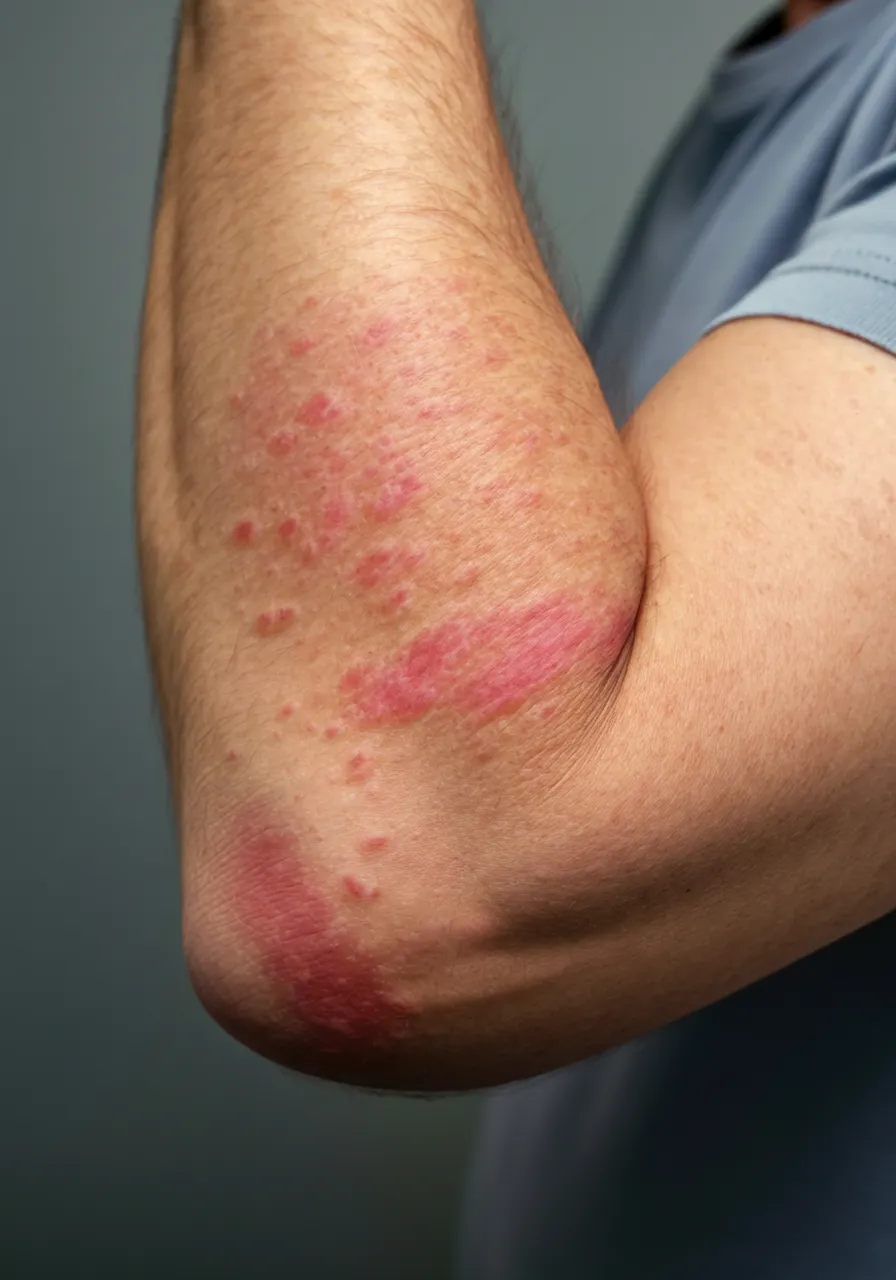
Illustrative input image
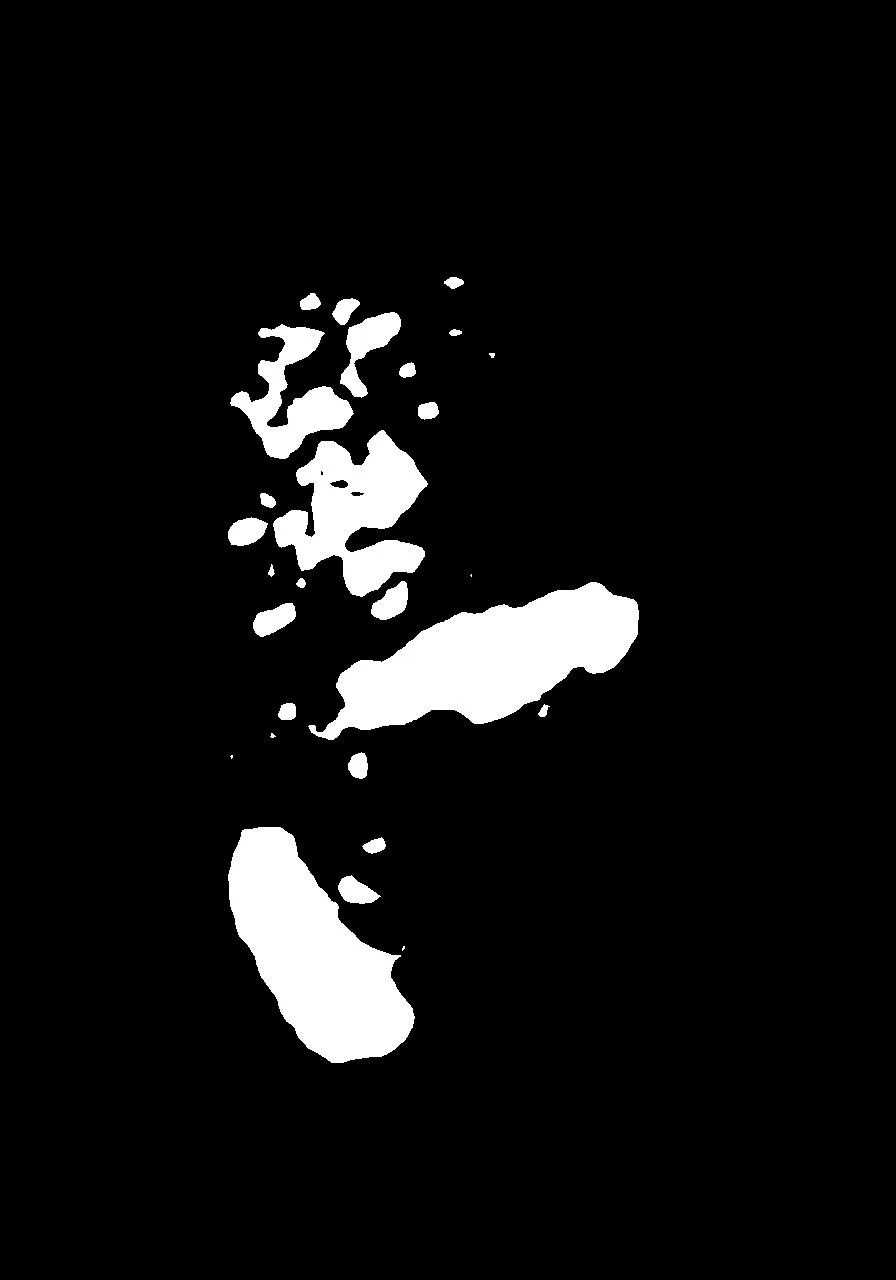
Illustrative affected-area mask
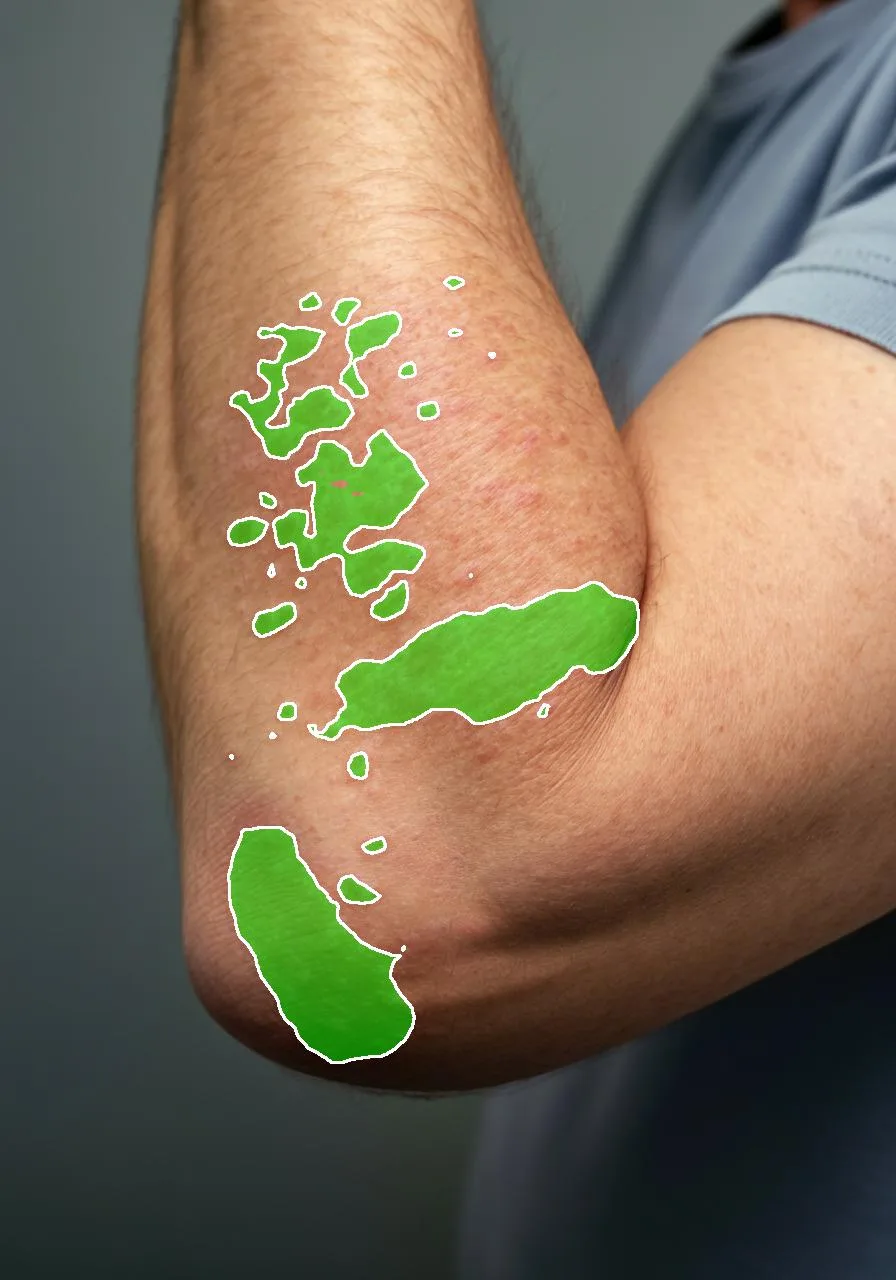
Illustrative affected-area overlay
Anonymization
All photographs are processed with automatic face anonymization, ensuring patient privacy for stored and exported images.
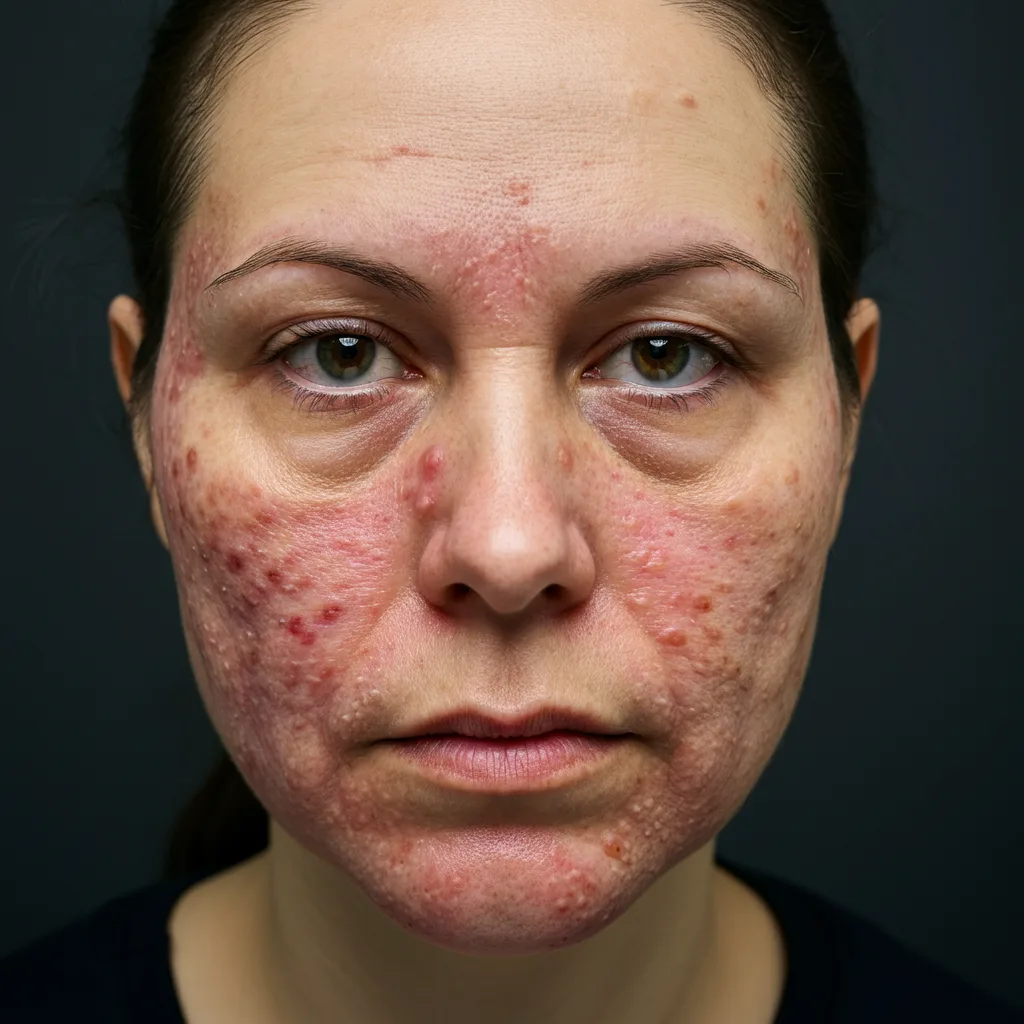
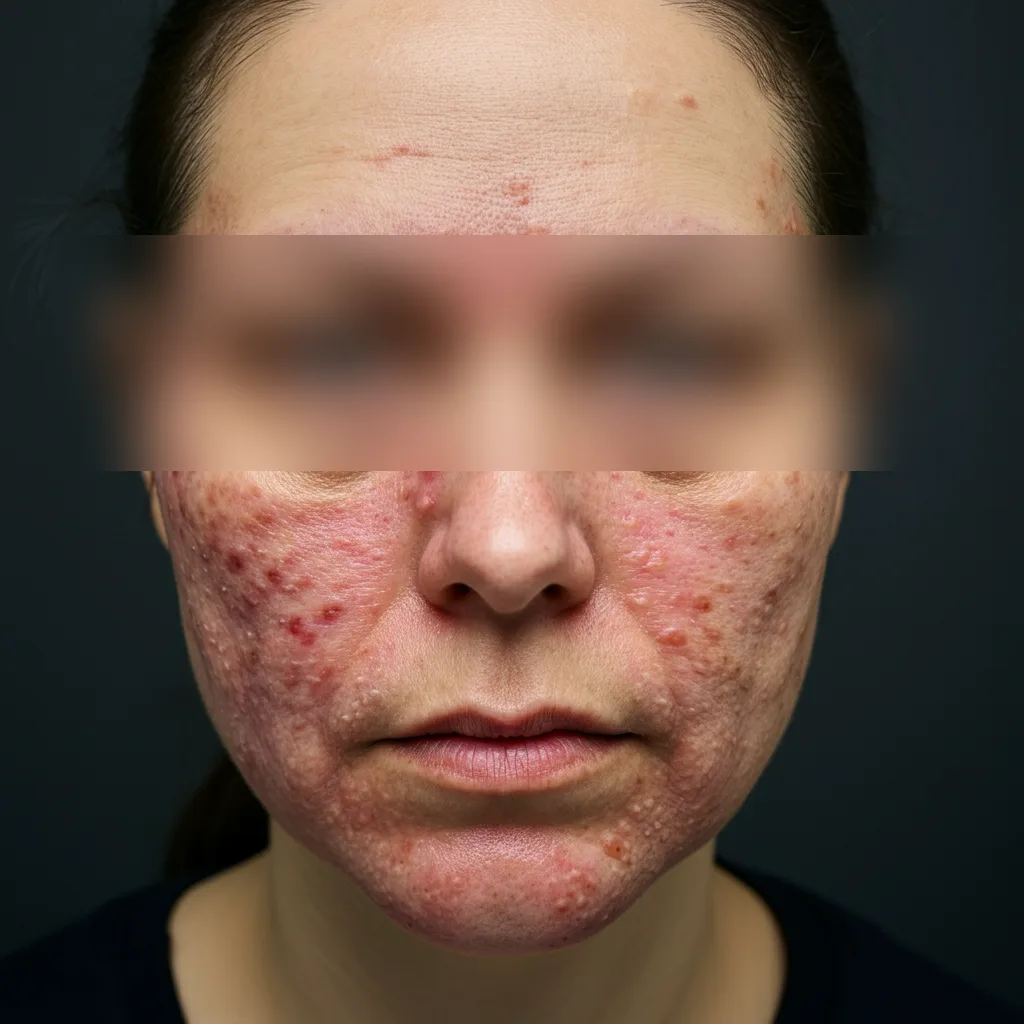
Irreversible face blurring applied
Longitudinal severity tracking
The platform tracks SCORAD evolution across visits from screening to end of study:
Baseline (T0)
SCORAD Local
Illustrative total SCORAD assessment
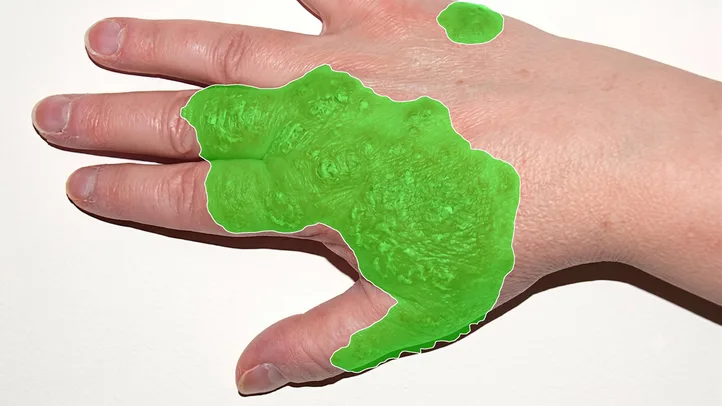
- Objective SCORAD
- 49.5 / 83
- Global affected BSA (A)
- 20%
- Pruritus
- 1 / 10
- Sleep disturbance
- 2 / 10
| Sign | Score |
|---|---|
| Erythema | Severe (3) |
| Oedema/papulation | Severe (3) |
| Oozing/crusts | Severe (3) |
| Excoriations | Mild (1) |
| Lichenification | Mild (1) |
| Dryness | Moderate (2) |
Follow-up (T1)
SCORAD Local
Illustrative total SCORAD assessment
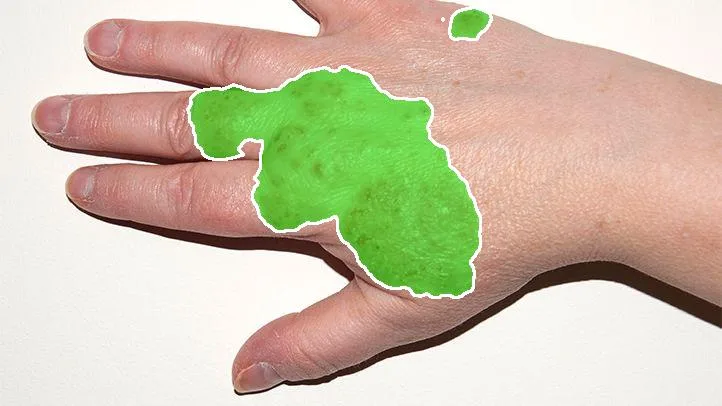
- Objective SCORAD
- 23.0 / 83
- Global affected BSA (A)
- 10%
- Pruritus
- 0 / 10
- Sleep disturbance
- 1 / 10
| Sign | Score |
|---|---|
| Erythema | Moderate (2) |
| Oedema/papulation | Mild (1) |
| Oozing/crusts | Mild (1) |
| Excoriations | None (0) |
| Lichenification | Mild (1) |
| Dryness | Mild (1) |
Illustrative SCORAD Local reports using synthetic dermatology imagery and demonstration data. The photographs show representative affected areas; global BSA is derived from the complete protocol image set.
What longitudinal tracking delivers
- SCORAD trajectory: Score at every visit from screening to end of study
- Absolute and percentage change from baseline at each visit
- Per-sign trend: Which intensity signs are driving improvement or worsening
- BSA evolution: How the extent of affected area changes over time
- Visual chart: Graphical severity curve across all timepoints
Data export for EDC integration
All assessment outputs are structured for export to the sponsor's EDC system:
| Field | Description |
|---|---|
| Patient ID | Pseudonymised study identifier |
| Visit ID | Visit number or scheduled timepoint |
| Timestamp | UTC timestamp of capture and processing |
| Total BSA (%) | Affected body surface area |
| Per-sign scores | Erythema, oedema, oozing, excoriations, lichenification, dryness (each 0–3) |
| Objective SCORAD | Computed objective component (0–83) |
| Total SCORAD | Including patient-reported symptoms (0–103) |
| Severity classification | Mild / Moderate / Severe |
Data is transferred automatically via RESTful API or CSV/Excel export. Legit.Health provides IQ/OQ documentation and data mapping specifications.
Reliability of the scores
The automated SCORAD approach—named ASCORAD in the published pilot study—was evaluated in retrospective technical-performance research (Medela et al., JID Innovations, 2022). It provides deterministic repeatability for an identical input under the same locked model version and processing configuration; this does not by itself establish reproducibility across different sites, visits, devices, operators, or acquisition conditions.
For the full validation evidence: Clinical Evidence →