Alopecia Severity Endpoints for Clinical Trials
The AI scoring provided by Legit.Health delivers automated, standardised alopecia severity scoring for clinical trials, quantifying scalp hair loss percentage across four quadrants and producing a SALT-aligned severity score: the endpoint recommended by FDA guidance for establishing alopecia areata treatment effectiveness.
ASALT
Score: 55
Report Information
Timestamp
8/19/2026, 12:51:22 PM
Analysis performed in
1.2 seconds
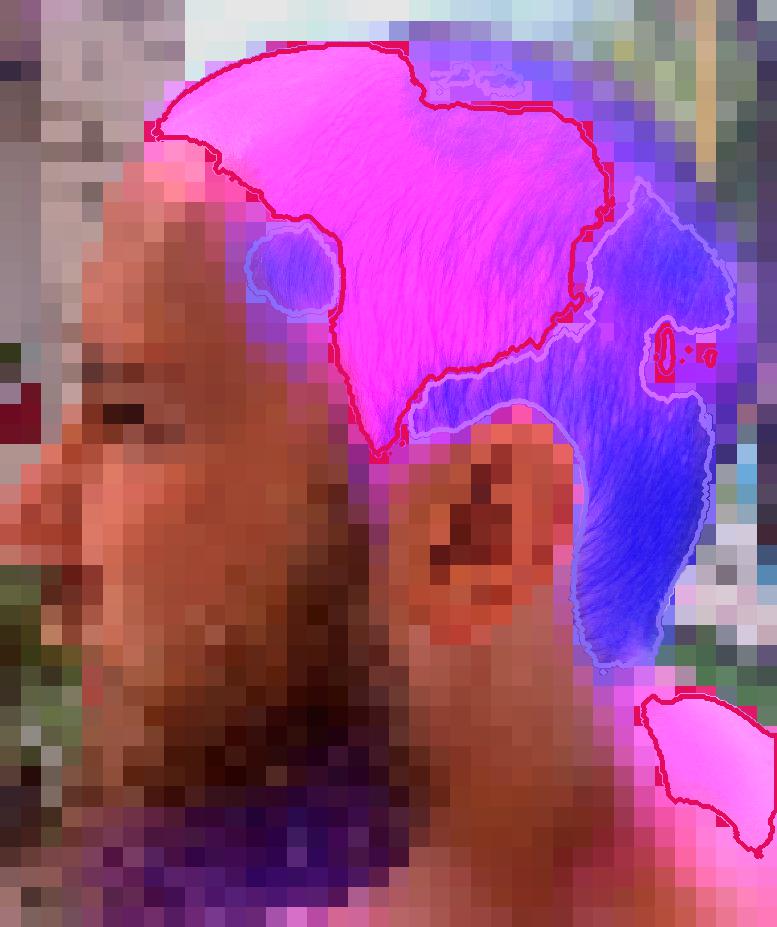
Body site
Left of the head
Image quality
68%

Body site
Right of the head
Image quality
66%

Body site
Top of the head
Image quality
63%
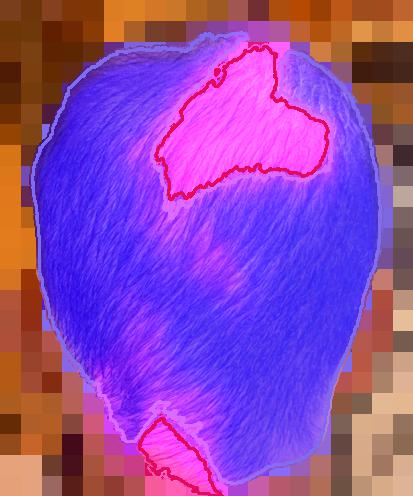
Body site
Back of the head
Image quality
55%
FDA guidance context
The FDA’s guidance document Alopecia Areata: Developing Drugs for Treatment. Guidance for Industry. (2022) establishes the standard for clinical trial endpoints:
- The SALT score is an acceptable efficacy measure for clinical trials evaluating treatments for alopecia areata.
- A SALT score of 0 or 1 (0–1% scalp hair loss) at study end is a reasonable responder definition for patients with extensive hair loss.
- Trials should use validated patient-reported outcomes to capture the patient perspective on hair loss severity.
- Photographic documentation should follow a standardised protocol to ensure consistency across sites and visits.
Endpoint capabilities
The AI provides four distinct endpoints, each configurable per study protocol:
| Endpoint | Definition | AI output | Typical use in protocol |
|---|---|---|---|
| Total ASALT score | Automated SALT score estimating the percentage of scalp affected by hair loss | 0–100 continuous scale | Co-primary |
| Regional ASALT scores | ASALT score for each scalp quadrant (left, right, top, back) | 0–100 per region | Secondary |
| SALT response categories | Responder analysis based on SALT change thresholds (SALT 50, SALT 75, SALT 90, SALT 100) | Binary response per threshold | Co-primary |
| Severity classification | Categorical severity based on total ASALT score (None, Limited, Moderate, Severe, Very Severe) | Category label and numeric severity | Secondary |
The SALT score (Severity of Alopecia Tool) is the accepted standard for quantifying alopecia areata severity in clinical trials. It measures the percentage of scalp affected by hair loss on a 0–100 scale, where 0 means no hair loss and 100 means complete hair loss. FDA guidance explicitly recognises SALT as an acceptable efficacy measure, and responder definitions based on SALT thresholds (SALT 50, SALT 75, SALT 90, SALT 100) are standard primary endpoints. Automated SALT scoring from standardised photographs eliminates the subjectivity inherent in visual percentage estimation.
How the AI works
The scoring pipeline processes each set of four scalp photographs in two stages:
Stage 1: Scalp segmentation
A deep learning segmentation model analyses each scalp quadrant image to identify hair-bearing and non-hair-bearing regions at the pixel level. The model produces a probability map for each pixel, which is then thresholded to classify scalp regions as having or lacking hair coverage.
Stage 2: SALT score computation
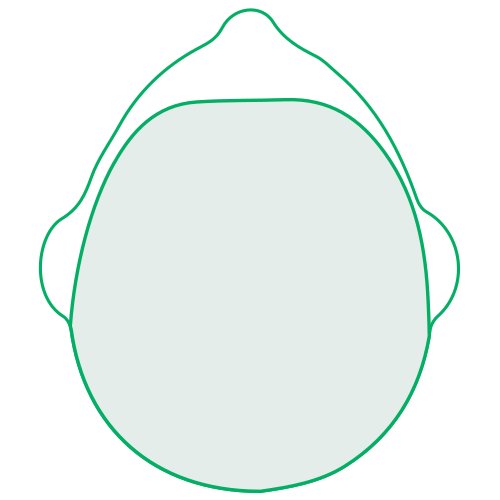
The regional hair loss percentages are combined into a total SALT score using the standard anatomical weights:
where is the percentage of hair loss in region and is the weight for that region (left 18%, right 18%, top 40%, back 24%), reflecting each quadrant's proportion of total scalp area.
| SALT score | Severity | Clinical description |
|---|---|---|
| 0 | None | No detectable hair loss |
| 1 | Limited | 1–24% scalp hair loss; localised patches |
| 2 | Moderate | 25–49% scalp hair loss; multiple or larger patches |
| 3 | Severe | 50–74% scalp hair loss; extensive involvement |
| 4 | Very Severe | 75–100% scalp hair loss; near-total (alopecia totalis) or total loss |
Visual report
The AI produces a structured severity report for each assessment, showing per-quadrant scores and the global SALT score:
ASALT
Score: 55
Report Information
Timestamp
8/19/2026, 12:51:22 PM
Analysis performed in
1.2 seconds
Body site
Left of the head
Image quality
68%
Body site
Right of the head
Image quality
66%
Body site
Top of the head
Image quality
63%
Body site
Back of the head
Image quality
55%
Protocol flexibility
The imaging and scoring protocol adapts to your study's needs. Legit.Health works with sponsors and CROs to configure the optimal protocol during study setup.
Imaging perspectives
| Protocol | Perspectives | Use case |
|---|---|---|
| Standard 4-quadrant | 4 views: Left side of scalp, Right side of scalp, Top of scalp, Back of scalp | Standard SALT protocol capturing all four scalp quadrants. Provides full scalp coverage for total SALT score calculation. Patient must be seated for the top perspective. |
| Custom | Any combination of perspectives | Any combination of scalp perspectives, defined in collaboration with the sponsor during protocol design. Can include additional close-up views for detailed lesion tracking. |
Global score aggregation
Unlike acne or psoriasis (which use maximum or weighted component scores), SALT uses a single standard aggregation: the weighted sum of regional hair loss percentages. This is inherent to the SALT methodology and ensures comparability with established SALT literature.
| Method | Formula | When to use |
|---|---|---|
| Weighted sum (SALT standard) (default) | Standard SALT aggregation. Each quadrant's hair loss percentage is weighted by its anatomical proportion of total scalp area. This is the only aggregation method used for SALT. |
SALT response thresholds
In addition to the continuous SALT score, the system computes standard SALT response categories used as responder endpoints in registration trials:
| Response | Definition | Clinical meaning |
|---|---|---|
| SALT 50 | >=50% reduction from baseline SALT score | Clinically meaningful improvement |
| SALT 75 | >=75% reduction from baseline SALT score | Substantial improvement |
| SALT 90 | >=90% reduction from baseline SALT score | Near-complete regrowth |
| SALT 100 | SALT score of 0 (complete regrowth) | Complete response |
Use case: severity assessment and adverse event monitoring
While automated SALT scoring was first deployed in a clinical trial for adverse event monitoring (detecting drug-induced alopecia in a Phase 3 MASH trial), the primary use case for sponsors is severity measurement in alopecia areata treatment trials:
- Efficacy endpoint: SALT score as co-primary or secondary endpoint for hair regrowth
- Responder analysis: Automated SALT 50/75/90/100 classification at each visit
- Longitudinal tracking: Severity evolution over the course of treatment
- Safety monitoring: Automated alerts when hair loss exceeds a configurable threshold from baseline (e.g., >=25% increase)
The same technology serves both use cases with identical scoring methodology.
Further reading
Scoring Methodology
Technical deep dive into the alopecia scoring pipeline, covering scalp segmentation, SALT regional weighting, score aggregation, severity classification, reproducibility, and comparison with manual SALT assessment.
Imaging Protocol
Image capture protocol for alopecia clinical trials, covering 4-quadrant scalp photography, DIQA quality control, patient preparation, and site standardisation.
Clinical Evidence
Validation methodology for alopecia severity endpoints, covering ground truth establishment, performance metrics, the regulatory evidence pathway, and ongoing validation studies.
Trial Workflow
End-to-end clinical trial workflow for alopecia severity endpoints, covering protocol design, patient enrollment, image capture, AI scoring, severity tracking, automated alerts, data export, and EDC integration.
Sample Outputs
Concrete examples of what sponsors, CROs, and investigators receive from alopecia severity assessments—per-visit SALT reports with per-quadrant breakdowns, automated safety alerts, and structured EDC data exports.
Publications
Key references from the alopecia areata literature, related publications, and the clinical validation portfolio supporting alopecia severity endpoints.
Limitations
Transparent documentation of what the AI alopecia severity scoring can and cannot do, including segmentation challenges, validation status, and how each limitation is managed.