AI-Powered Endpoint Scoring for Dermatology Clinical Trials
Objective, reproducible dermatological endpoint scoring, from smartphone images, in under 2 seconds.
- Acne (IGA)
- Psoriasis (PASI)
- Alopecia (SALT)
IGA
3
ModerateAcne Lesion And Density Index
3.5
ModerateScale 0 – 4 (continuous)
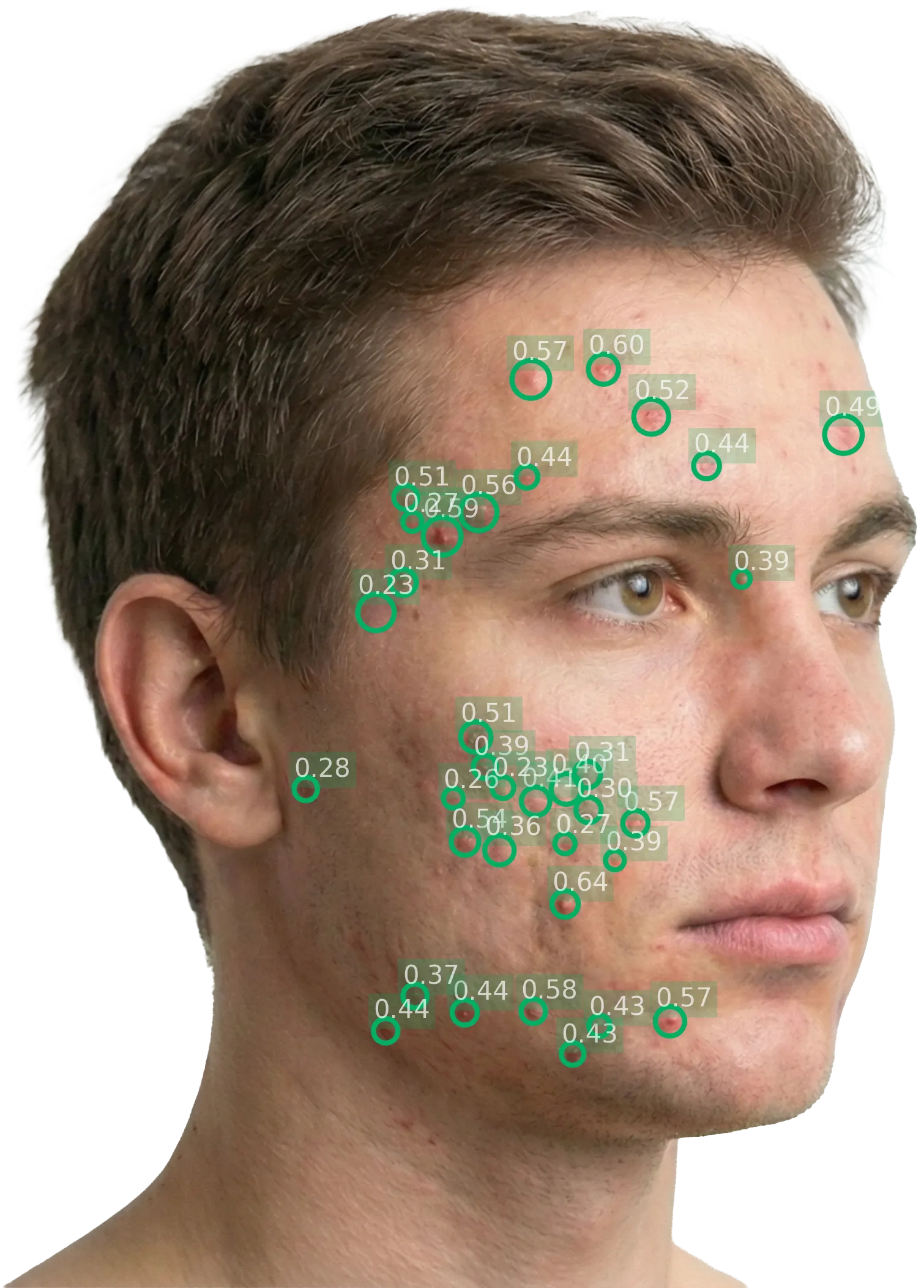
Body site
Left diagonal
Image quality
92%
Lesion count
36
Density
0.55
Local score
3.42
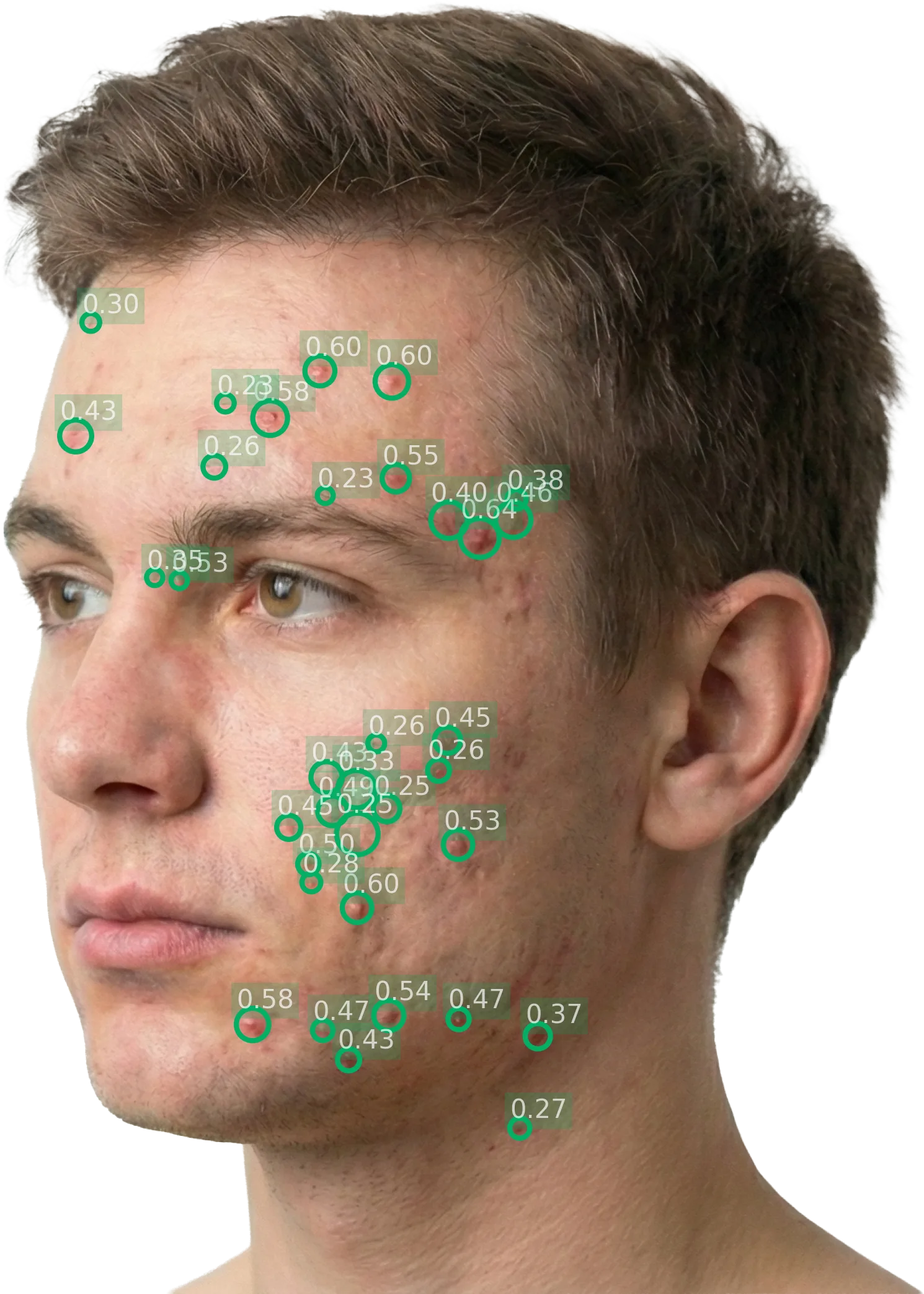
Body site
Right diagonal
Image quality
88%
Lesion count
35
Density
0.6
Local score
3.49
Psoriasis Area and Severity Index
PASI 13.6
Report Information
Timestamp
8/19/2026, 12:50:56 PM
Analysis performed in
2.1 seconds

Body region
Head
Image quality
91%
Erythema
2Desquam.
2Induration
1BSA covered
30%
Region PASI
1.0

Body region
Trunk
Image quality
89%
Erythema
3Desquam.
2Induration
2BSA covered
15%
Region PASI
4.2

Body region
Upper extremities
Image quality
93%
Erythema
2Desquam.
1Induration
2BSA covered
10%
Region PASI
2.0

Body region
Lower extremities
Image quality
87%
Erythema
3Desquam.
3Induration
2BSA covered
20%
Region PASI
6.4
ASALT
Score: 55
Report Information
Timestamp
8/19/2026, 12:50:56 PM
Analysis performed in
1.2 seconds
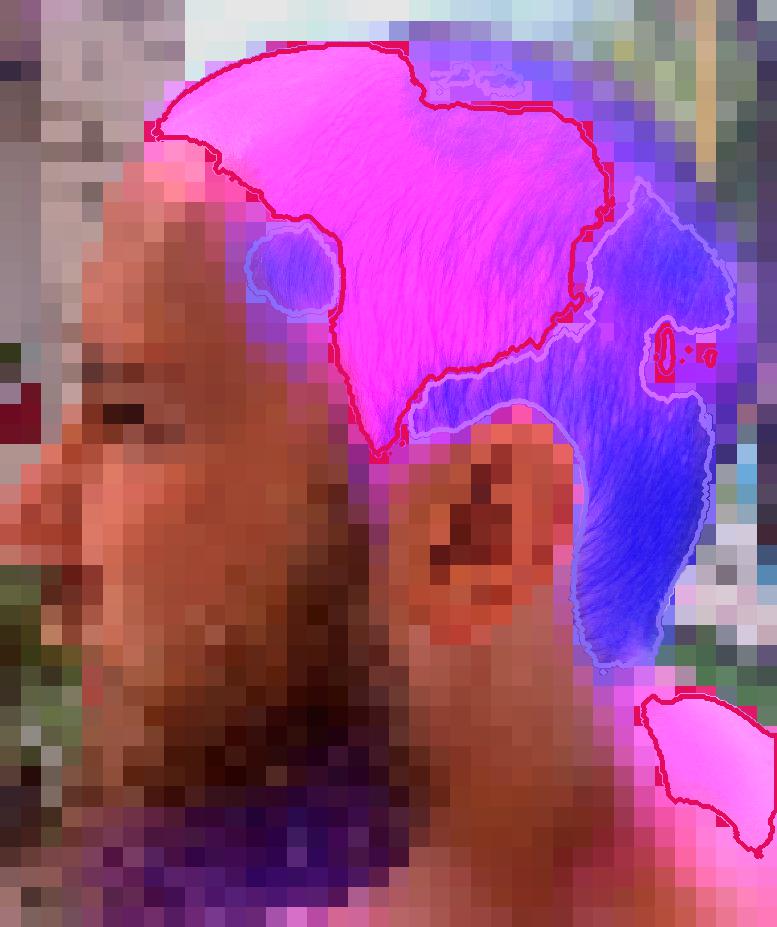
Body site
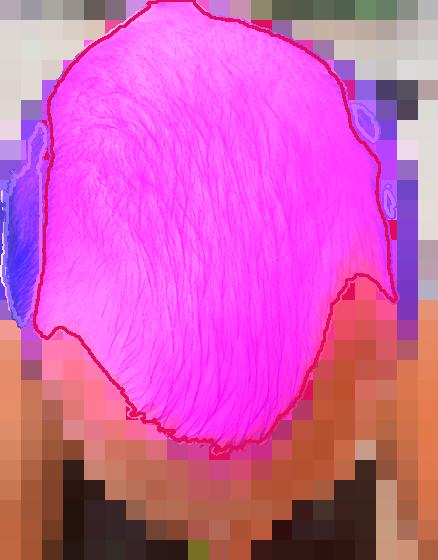
Left of the head
Image quality
68%
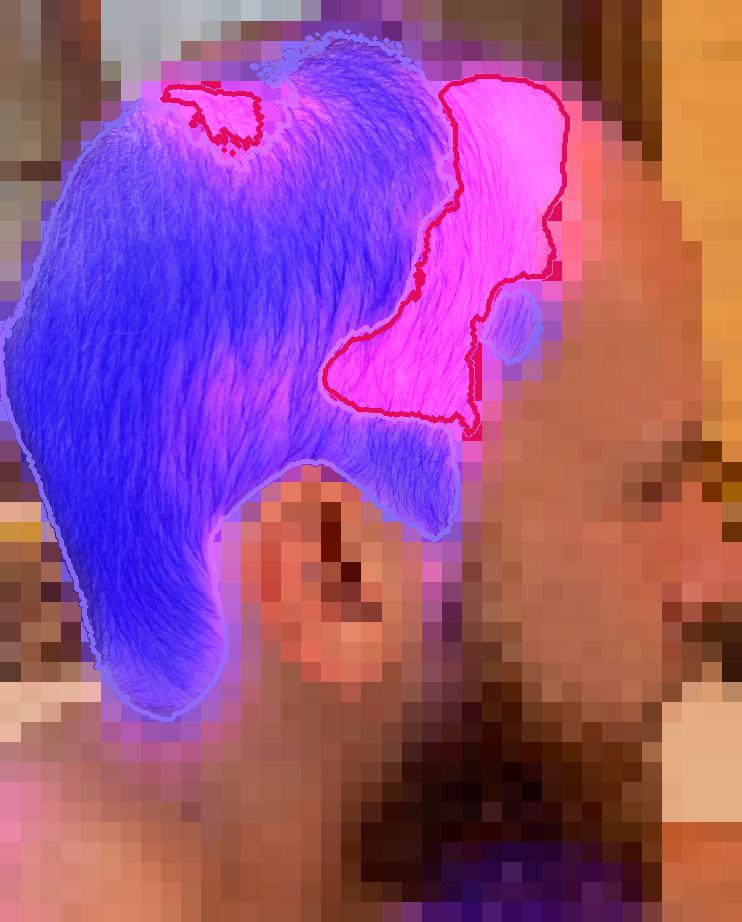
Body site
Right of the head
Image quality
66%
Body site
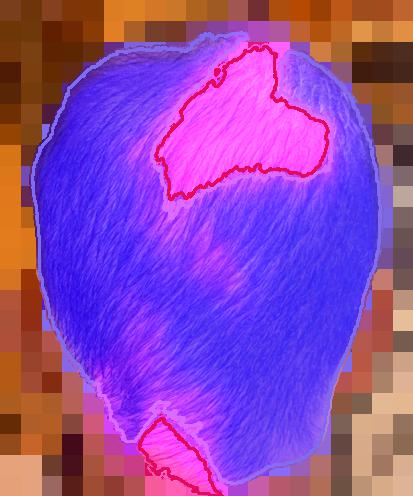
Top of the head
Image quality
63%
Body site
Back of the head
Image quality
55%
Legit.Health provides automated scoring of dermatological endpoints for clinical trials. The AI quantifies severity using established clinical scales (IGA for acne, PASI for psoriasis, SCORAD for atopic dermatitis, and more), eliminating inter-rater variability and reducing site burden.
The technology is embedded in a CE-marked Class IIa medical device (MDD 93/42/EEC), built on an ISO 13485-certified quality management system and compliant with 21 CFR Part 11 for electronic records.
Proven in clinical trials
The technology is actively deployed in clinical trials with top-10 pharma companies. Active engagements span psoriasis, acne, alopecia, atopic dermatitis, and generalized pustular psoriasis, including fully decentralised (home-based) capture validated in a pivotal Phase 3 programme.
AI-computed endpoints have been accepted by regulators as secondary endpoints and as a means to detect adverse events in clinical submissions.
See our clinical trial experience →
The problem with manual scoring
Manual scoring
Same patient, same image — three dermatologists, three different scores:
Typical inter-rater agreement: Cohen's κ = 0.41–0.60
AI scoring
Same patient, same image — always the same result:
Intra-rater variability: 0.00 — perfectly reproducible
Inter-rater variability
Different investigators assign different scores to the same patient
Slow and costly
Lesion counting takes 5\u201315 minutes per patient and is impractical at scale
Inflated sample sizes
Scoring noise masks treatment effects, requiring larger enrolments
Site training burden
Calibration exercises are costly, time-consuming, and imperfect
What we provide
Legit.Health delivers three core capabilities for dermatology clinical trials:
| Capability | What it measures | Output |
|---|---|---|
| Automated lesion detection | Individual lesions via object detection, with per-lesion classification | Per-perspective and total integer counts |
| Spatial analysis | Lesion clustering, affected body surface area, and regional distribution | Density ratio or BSA percentage |
| Severity scoring | Global severity aligned with established clinical scales (e.g., IGA, PASI, SALT) | Score on the reference scale |
These three capabilities form the foundation for all condition-specific endpoints. The specific outputs are tailored to each indication (lesion counts and IGA for acne, component scores and PASI for psoriasis, BSA and SALT for alopecia), but the underlying architecture is consistent.
How it works
The clinical trial workflow follows three steps:
1. Image capture at the investigator site
Investigators capture standardized photographs using the Legit.Health mobile application on a standard smartphone. The application guides the capture process with condition-specific perspective protocols and validates image quality in real time using the DIQA algorithm.
The number and type of perspectives vary by indication (2 facial perspectives for acne, 11 full-body perspectives for psoriasis, 4 scalp quadrants for alopecia), but the capture experience is consistent across all conditions.
2. Automated AI scoring
Uploaded images are processed by condition-specific deep learning models. Processing takes under 2 seconds. The system outputs:
- Lesion detection or segmentation with visual overlays
- Per-region and global severity scores aligned with the reference clinical scale
- Image quality assessment (DIQA score)
- Acne report
- Psoriasis report
- Alopecia report
IGA
3
ModerateAcne Lesion And Density Index
3.5
ModerateScale 0 – 4 (continuous)
Body site
Left diagonal
Image quality
92%
Lesion count
36
Density
0.55
Local score
3.42
Body site
Right diagonal
Image quality
88%
Lesion count
35
Density
0.6
Local score
3.49
Psoriasis Area and Severity Index
PASI 13.6
Report Information
Timestamp
8/19/2026, 12:50:56 PM
Analysis performed in
2.1 seconds
Body region
Head
Image quality
91%
Erythema
2Desquam.
2Induration
1BSA covered
30%
Region PASI
1.0
Body region
Trunk
Image quality
89%
Erythema
3Desquam.
2Induration
2BSA covered
15%
Region PASI
4.2
Body region
Upper extremities
Image quality
93%
Erythema
2Desquam.
1Induration
2BSA covered
10%
Region PASI
2.0
Body region
Lower extremities
Image quality
87%
Erythema
3Desquam.
3Induration
2BSA covered
20%
Region PASI
6.4
ASALT
Score: 55
Report Information
Timestamp
8/19/2026, 12:50:56 PM
Analysis performed in
1.2 seconds
Body site
Left of the head
Image quality
68%
Body site
Right of the head
Image quality
66%
Body site
Top of the head
Image quality
63%
Body site
Back of the head
Image quality
55%
3. Scored endpoints for data export
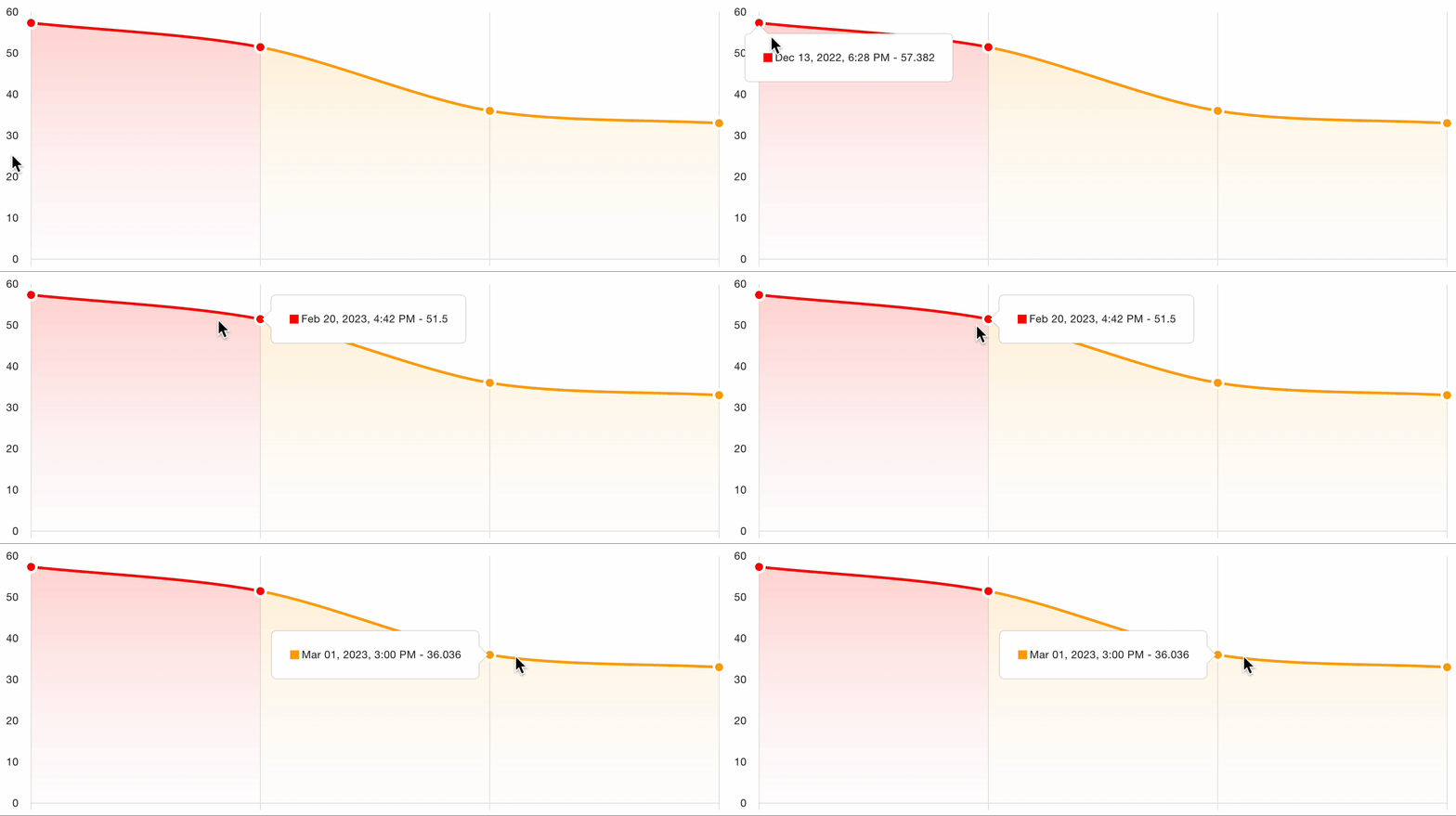
Results are available through the Legit.Health clinical trials platform and can be exported to EDC systems. Each report includes timestamped severity scores, per-perspective analyses, quality metrics, and longitudinal severity evolution.
Why sponsors choose this
No special hardware
Standard smartphone cameras replace expensive specialised photography equipment. This is a fraction of the cost of systems like Canfield VISIA, with no per-site rental fees and no hardware logistics.
Eliminates inter-rater variability
The AI produces the same score for the same image, every time, at every site, without calibration exercises. This reduces noise in endpoint data and can reduce required sample sizes.
Regulatory-aligned endpoints
The system provides the standard clinical scales that regulators expect (IGA for acne, PASI for psoriasis, SALT for alopecia) with the added benefit of perfect reproducibility. Novel composite scores (e.g., ALADIN for acne, APASI for psoriasis) are positioned for exploratory and secondary use, adding resolution for Phase 2 dose-finding and internal go/no-go decisions.
Regulatory endpoint acceptance
AI-computed endpoints from Legit.Health have been accepted as secondary endpoints and for adverse event detection in regulatory submissions. For primary registration endpoints, the system provides the standard clinical scales that regulators expect, with the added benefit of perfect reproducibility.
Under 2 seconds
Real-time scoring at the investigator site. No images sent to a central reader. No delays waiting for scores.
Multi-site consistency
Scores are comparable across all investigator sites without calibration exercises, training sessions, or inter-rater reliability assessments. The AI is the rater, and it is perfectly consistent.
QuantifiCare partnership
Legit.Health integrates seamlessly with QuantifiCare's standardised photography platforms and clinical trial imaging services. The combined offering provides:
| Capability | Provider | Benefit |
|---|---|---|
| Standardised photography hardware | QuantifiCare | Controlled lighting, positioning, and colour calibration across all sites |
| Colour calibration stickers | QuantifiCare | Fixed colour reference for AI normalisation, reducing lighting-related variability |
| AI-powered endpoint scoring | Legit.Health | Automated PASI, IGA, SALT, SCORAD, IHS4 from standardised images |
| Image management and workflow | Joint | Combined platform for capture, quality control, scoring, and data export |
| Site training and support | Joint | Unified training materials for photography and AI scoring workflow |
This best-of-breed combination is available for sponsors who require both standardised photography infrastructure and automated AI endpoint scoring. For sponsors using standard smartphones, the Legit.Health standalone offering provides the same AI scoring with built-in DIQA quality control.
Indications
Acne
Automated lesion counting, spatial density, and IGA scoring. 2-perspective facial imaging with configurable protocols.
Psoriasis
APASI scoring with 11-perspective full-body imaging. PASI 0–72 scale. Erythema, desquamation, induration, and BSA across 4 regions.
Atopic Dermatitis
ASCORAD scoring. SCORAD 0–103 objective scale. 22+ visual signs quantified. Validated in JID Innovations (2022). Active clinical deployments.
Alopecia Areata
Automated SALT scoring with 4-quadrant scalp imaging. SALT 0–100 scale. Automated severity assessment and adverse event monitoring.
Hidradenitis Suppurativa
AIHS4 scoring. IHS4 scale. Validated in Phase 2/3 clinical trial with ICC 0.727 — substantially exceeds manual inter-rater reliability (ICC 0.47).
Additional Indications
Vitiligo (VASI), Urticaria (UAS7), Wounds (AWOSI), Melasma (MASI), and more. Coming soon.
Regulatory status
Software lifecycle per IEC 62304, usability per IEC 62366-1, risk management per ISO 14971, clinical evaluation per MEDDEV 2.7/1 Rev 4 and MDR Annex XIV.
Accelerate your trials
Join pharmaceutical companies, biotechs, and CROs reaching the market 4-6 months faster with superior data quality. Fill in the form to discuss your study requirements.