An image is worth a thousand words.
From one clinical photograph, Legit.Health returns a ranked differential diagnosis coded to ICD-11, a referral index, a malignancy index, an image quality score and, where the condition has a validated scale, a severity score. Each one is a field in the report that your system can act on, and a step in the interface your clinicians and patients see. This page takes them one at a time, with the study behind each.
Diagnosis support
A ranked differential, not a single answer.
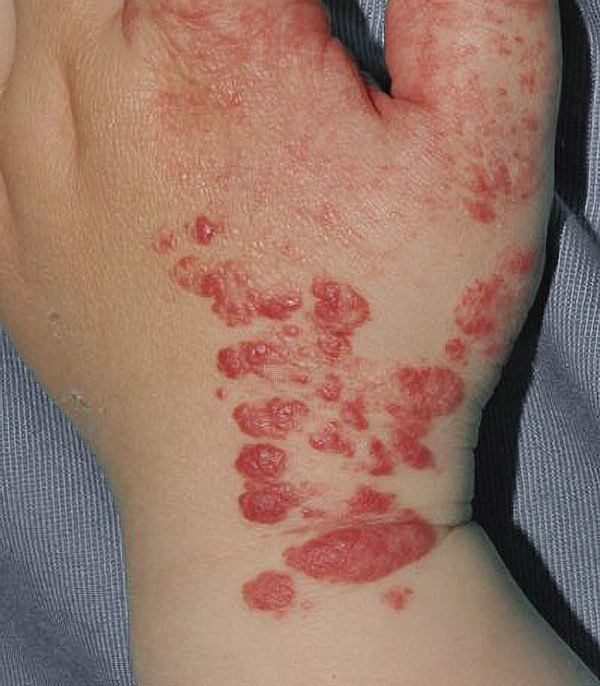
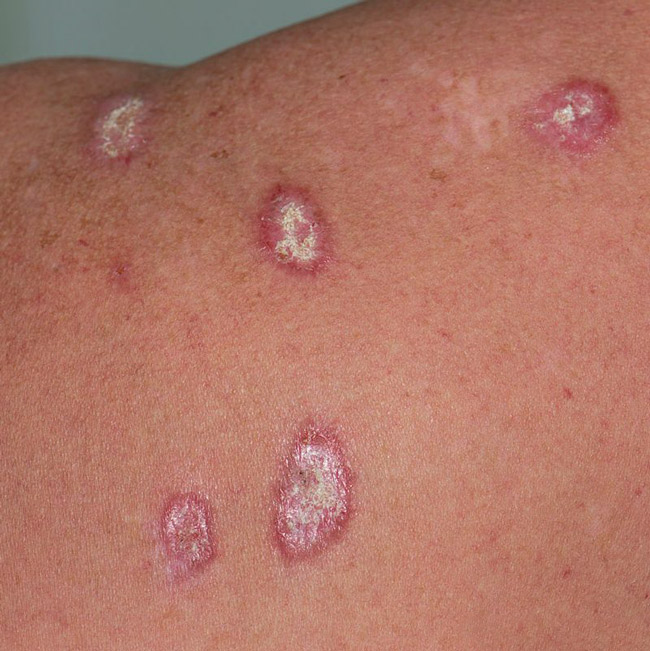
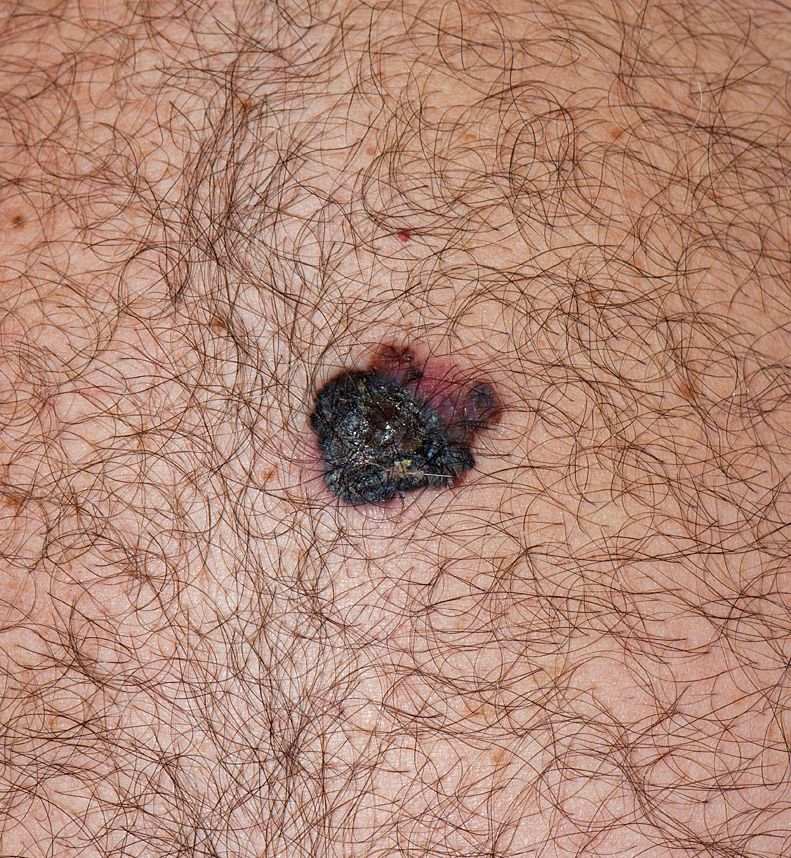
Legit.Health is intended for every visible skin condition. For each photograph it returns the conditions it may show, ranked by probability and each with its ICD-11 code, drawn from some 300 conditions it recognises, from the common to the rare. Seeing several possibilities, each with its probability, tells the clinician how sure Legit.Health is and what else to rule out. Like everything Legit.Health returns, it is clinically validated and certified under the EU MDR.
Indexes
Indexes that help decide what to do next.
A differential tells you what it might be. The indexes tell you what to do about it: whether a condition is there at all, how likely the lesion is malignant, and how likely the case needs a dermatologist. Each is a probability from 0 to 100, so each can sit behind a threshold you choose.
How it works
- Condition present: whether the photograph shows a skin condition at all, read before anything else.
- Malignancy index: how likely the lesion is malignant, for fast-track pathways and screening campaigns.
- Referral index: how likely the case needs a dermatologist, for triage and waiting-list priority.
- Entropy: how spread out the differential is, from 0 to 100. It is low when one condition clearly leads and high when several are about equally likely, so an uncertain case can be sent to a person instead of down an automatic pathway.
- In focus
- Well lit
- Well framed
- Right distance
Image quality check
Quality assurance for dermatological images.
An analysis is only as good as the photograph it starts from, and the person taking it is often untrained and in a hurry. Every image is scored for quality before it is analysed, and one below the threshold is refused with a reason, so the photograph is retaken straight away instead of producing an unreliable report. The quality model is described and validated in the DIQA study.
How it works
- Blur, lighting, framing and distance, each named when it is the problem, with a note on how to retake the photograph.
- The score runs from 0 to 100. The acceptance threshold is set for each customer, and the score travels with the report so an integrator can apply a stricter one.
Severity measure
Severity scores, calculated from the photograph.
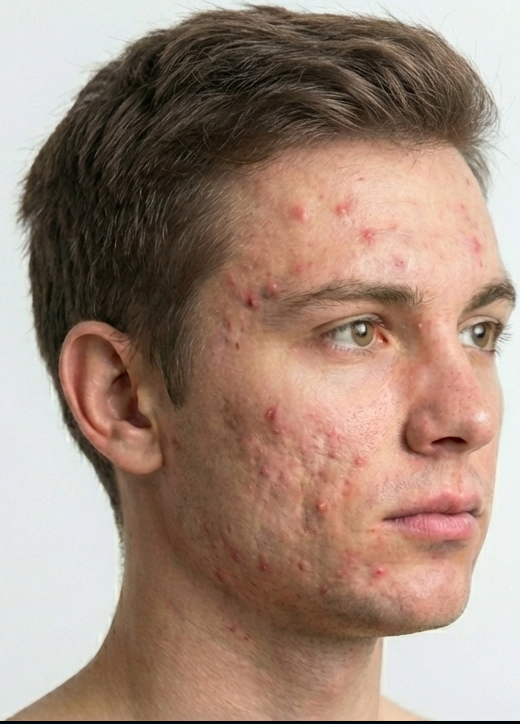
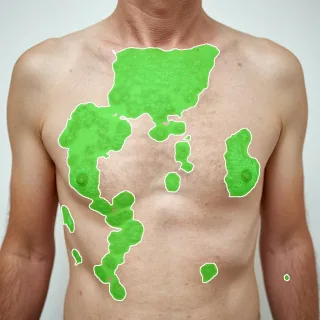
Knowing what it is comes first; knowing how severe it is informs the treatment, the level of care and whether the last treatment worked. When the condition has a validated scoring scale, Legit.Health measures the signs that scale uses (the intensity of redness, scaling or thickening, the area affected, the number of lesions), and the app turns those measurements into the finished score, with no hand calculation. Each automated score has its own study: APASI for psoriasis, ASCORAD for atopic dermatitis, AUAS for urticaria, AIHS4 for hidradenitis suppurativa, ALADIN for acne and AGPPGA for generalised pustular psoriasis.
 MeasuredPhotograph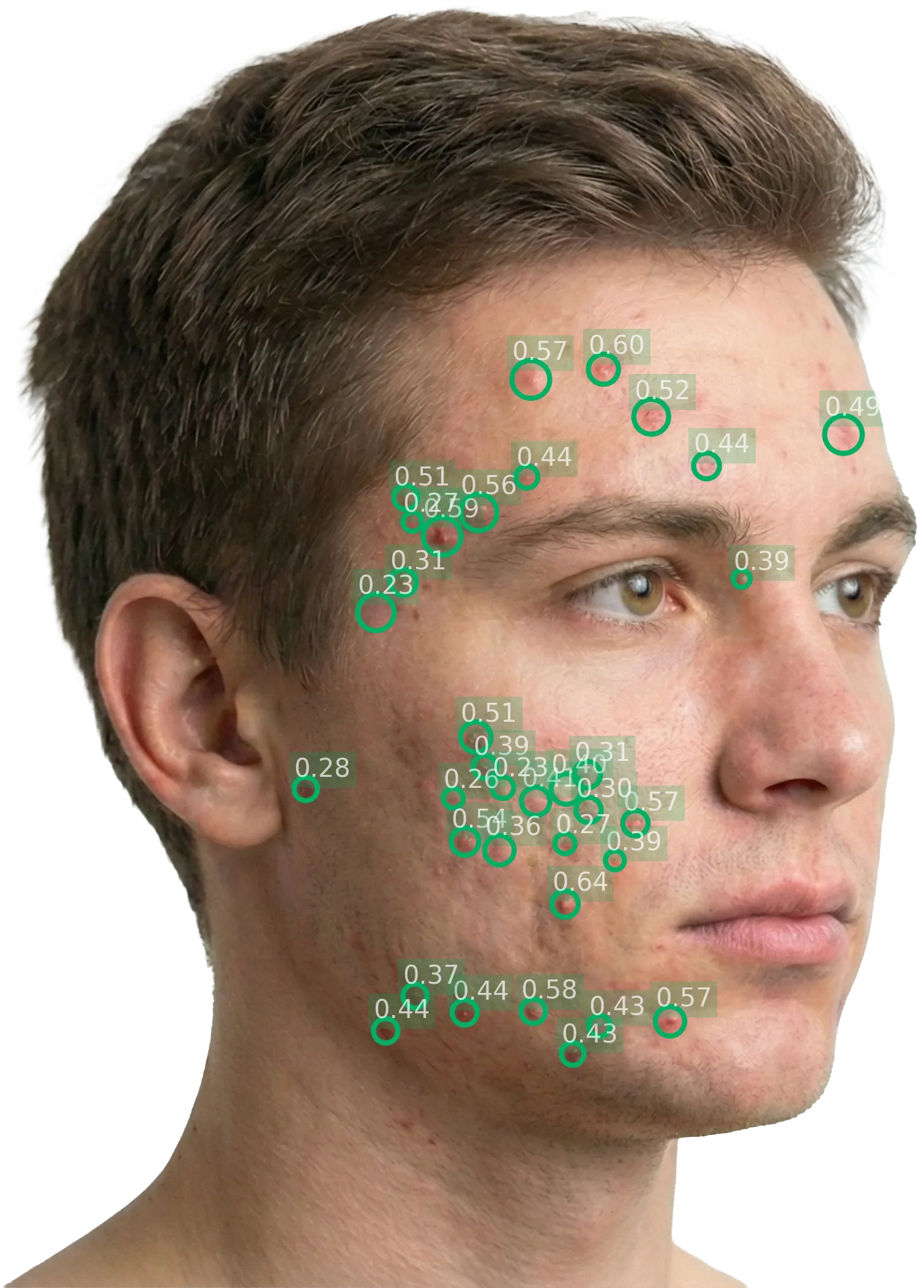
Illustrative. Legit.Health returns a ranked differential with a confidence level for each condition, and calculates the associated validated severity score when one applies.
Image capture flow
Four steps from opening the app to a report in the record.
The flow is the same whether a nurse holds the phone in a consultation or a patient holds it at home. The clinical questionnaire and the wider photograph can each be switched on or off from the URL. The capture guidance and the quality check always run, because the instructions for use rely on both.
- Body site: The user marks where on the body the photograph is taken, and the report records it.
- Guided capture: Framing and distance guidance on screen, in the depth your users need. Several photographs of one lesion form one report.
- Quality gate: Each image is scored. Below the threshold, the user is told why and asked for another; above it, the analysis runs.
- Report, then record: The differential, indexes and severity appear on screen for a clinician, and the same report reaches your system as JSON, FHIR or PDF. When a patient takes the photographs, the result can be hidden from them: they see that the photographs were sent, and the report goes to the healthcare professional.
In the app, an AI assistant also checks each photograph before it is sent and explains the report in plain language; the implementation page describes what it does and what it never does.
Multiplatform
Web, iOS and Android, in any product that shows a web page.
The app is lightweight and is embedded as an <iframe>, so it runs wherever your product runs: a desktop record system, a native app on iOS or Android, a patient portal. It is multilingual, and further languages can be added on request. The app files the report against the patient's visit rather than the phone it was taken on, so a clinician can review on the desktop what a nurse or a patient photographed on a phone.

How you get it
Everything on this page, in one app with its API.
You embed the app in your own system: your users get the interface, and your systems get every report through the app's API, as JSON, FHIR or PDF. It is live within a week.
Behind each report, the app calls the device API for you. The console shows what comes back, each field marked with a colour, and where the same colour lands in your system: a triage board, the patient record or a follow-up chart.
{ "identifier": "a9ae9e81-…", "imageAnalyses": [ { "technicalSummary": { "imageQuality": { "score": 7.4, "interpretation": "good" } } } ], "studyAggregate": { "findings": { "hypotheses": [ { "identifier": "psoriasis", "probability": 84.2 }, … ], "entropy": 22.1, "riskMetrics": { "urgentReferralProbability": 4.1, "highPriorityReferralProbability": 62.0, "malignantConditionProbability": 1.2 } } }}
- Quality: Whether each photograph can be assessed and how good it is, so a poor one is retaken before anything else is read.
- Diagnosis: The conditions the photographs may show, ranked by probability, and how certain that ranking is.
- Referral: How likely the case needs a specialist and how likely the lesion is malignant, to set its priority and its pathway.
- Severity: The intensity and the extent of each clinical sign, to grade the condition and follow it from one visit to the next.
Termin ausmachenfür eine Live-Demo
Legit.Health ist die All-in-One-Lösung für künstliche Intelligenz mit extrem hoher Leistung, exklusiven Funktionen und klinischer Unterstützung.